Thanksgiving: a time for family, friends, food, and watching the Detroit Lions lose. One other thing…. it’s time for IRA contributions. Definitely not the most warm and fuzzy thing to think about, but it will ensure that one day you can be the cool grandparent that hosts the whole family and supplies the feast.
First, let’s recap the basics. IRA = Individual Retirement Account. It’s a retirement account that isn’t connected to your employer, like your 401k is. If you leave your job, you’ll likely roll your 401k over into your IRA.
There are limits to how much you can contribute to your IRA and/or Roth IRA each year. For 2018, that limit is $5,500 for those under the age of 50. For 2019, it will be $6,000. That limit is for your IRAs combined.
The two most common IRA types are a “Traditional IRA” and a “Roth IRA”. You contribute to these accounts just like any account. When you make the contribution, you will need to indicate you’re making the contribution for 2018. The key difference is eligibility and taxation
Roth IRA:
If you file your taxes as “single” you can’t make Roth contributions if your income is over $135k. If you file as “Married Filing Jointly” (MFJ), you can’t make contributions if you and your spouse’s gross income is greater than $199k. For each limit, there is a phaseout range starting at 120k for single and 189k for MFJ. Basically, if you are making less than these amounts, make Roth IRA contributions while you can.
Pros: your money grows tax-free in the Roth IRA. Even if you make trades in the account and experience capital gains, they aren’t taxable gains. If you own $10k of Amazon and the stock doubles, you just made $10k of tax-free earnings (as long as you wait until you’re 59 1/2 to withdraw the money. More on that in the “cons” section.) You can always draw upon your contributions (not the earnings). Another pro is that you never have to withdraw money from a Roth IRA. If you’re old and rich one day, you can just leave the money in your Roth IRA and watch the tax-free earnings pile up.
Cons: The tradeoff for the tax-friendly nature of the account is that you can’t draw upon your earnings until age 59 ½. If you do, you will be taxed and get a 10% penalty. Some exceptions do apply to avoid the 10% penalty, such as purchasing a first home, medical emergencies, and avoiding getting evicted by a landlord. No, for real.
Traditional IRA:
Anyone can contribute. If you contribute and make less than a certain amount of income, you can deduct your contributions from your income. For single, the phaseout is from 63k to 73k. For MFJ, the phaseout is $101k to $121k. If you’re under this amount and are able to deduct $5500 from your taxable income, you’re saving a nice chunk on your taxes for the year*.
*the government will eventually get you, though. More on that later.
Let’s say you aren’t able to deduct and you also make more than the allowed amount for a Roth IRA. Wipe your tears and keep your chin up. You can still contribute to your IRA and then do what’s called a “backdoor Roth conversion” at any time. Essentially, you deposit the funds into the IRA, don’t get a tax deduction, and then just transfer the money to your Roth IRA account. Kind of funky, but remember, Roth IRAs weren’t created until 1997. It can take the government a bit of time to make changes. You want to make these conversions ASAP though, before your investments start making earnings. Then it gets a bit trickier to get your assets over to your Roth. In short, $5,500 in to IRA,
Pros: Tax-deferred growth. Possible tax-deduction for those below a certain income level, which encourages saving.
Cons: If you take a tax-deduction now, you get taxed when you withdraw the money when you’re old. Same rules apply as the Roth. However, when you’re 70 ½ the IRS forces you to withdraw a certain amount.
If your cash-flow allows, try and pay yourself $5500 each year. If you’re wondering how to save for retirement, here’s a baseline “order of operations.”
- Contribute to your 401k at the very minimum what it takes to get your full employer match.
2 (tie) Contribute to your 401k some more, as long as you like what its being invested in. Your max contribution for 2018 is $18,500. It will be $19k in 2019. If you hit that number, your employer will automatically stop deducting that savings from your paycheck and you’ll be rolling in the dollar bills with your take-home pay.
2 (tie) Contribute to your Roth IRA or IRA. Same benefits as above, but you get more control over the investments. This could be good or bad, depending on you.
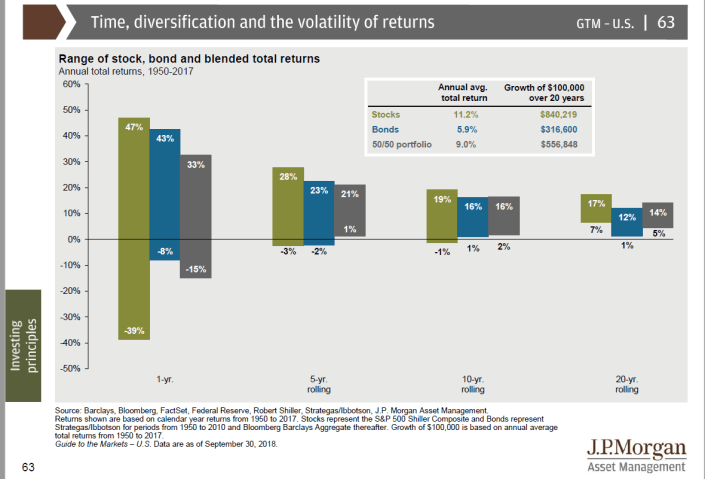
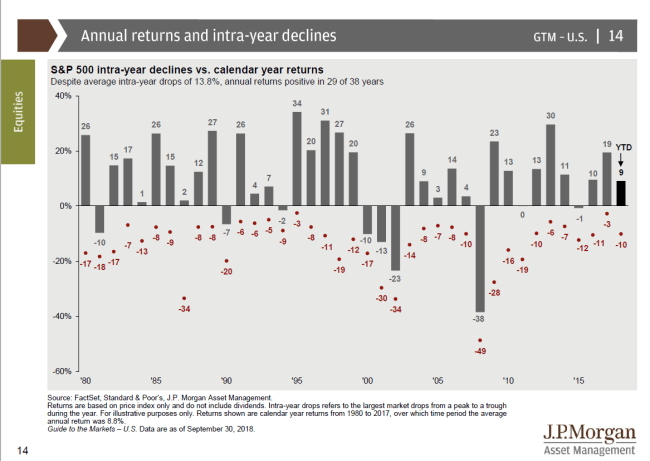
Remember, you still need enough savings on-hand to take care of things as they come up. You want to try and not dip into your retirement accounts until at least age 60. Because of their long-term nature, you can be aggressive in these accounts and invest in more volatile but high-growth potential funds, such as US-small cap and Foreign ETFs, in addition to US-mid and US-large. You won’t be drawing on these funds for a couple decades, so you’re in a position to take on more risk and get rewarded for it over the long-term.
The deadline to make retirement contributions is the date when you file your taxes for the year. So, technically April 2019. If you receive a Holiday bonus, it’s a great time to contribute to that Roth IRA before you accidentally drink a little too much Egg Nog and go on an Amazon spending spree.
That was a lengthy article. This stuff can be confusing. If you want to read more, Investopedia is a great online resource. If you have any questions, feel free to email or call me. Otherwise, have a great Thanksgiving and enjoy watching Stafford throw a few picks for the Lions.
 MoneyStuff